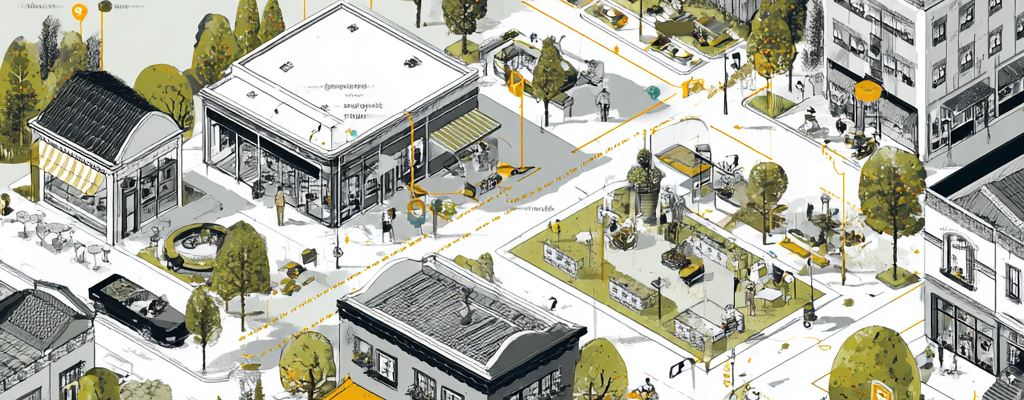
Deconstructing the Umpqua Model: From Bank Branch to Community Hub
In an era where digital transformation has led many financial institutions to view the physical branch as a costly legacy channel, Umpqua Bank has pursued a contrarian and highly influential strategy. The bank has systematically reimagined its physical locations, moving them away from purely transactional centers and toward dynamic, experience-rich community hubs. This foundational philosophy is not a superficial marketing overlay but a deeply integrated business model designed to forge lasting customer relationships and embed the bank into the fabric of the communities it serves. By transforming the branch from a place of necessity into a destination for engagement, Umpqua has built a durable competitive advantage that challenges conventional wisdom about the future of retail banking.
The “Store” Philosophy: A Strategic Shift from Transaction to Engagement
The most fundamental element of Umpqua’s strategy is its deliberate lexicon. The institution eschews the traditional term “branch” in favor of “store”.1 This is more than semantics; it signals a profound shift in purpose and customer experience. The goal, as articulated by the bank’s leadership, is to create a banking environment that is “approachable, engaging, and fun,” directly confronting the “huge intimidation factor” that many consumers associate with financial institutions.1 This approach seeks to lower psychological barriers, making financial conversations more comfortable and accessible.
This philosophy is the result of a long-term, iterative evolution. Umpqua debuted its first “store” concept in 1995, which was refined into a “community hub” model in 2003. By 2007, the bank rolled out its first “neighborhood store” in Seattle, demonstrating a consistent, multi-decade commitment to this vision.3 A pivotal moment in this journey was the bank’s partnership with the design firm Ziba, which was tasked with translating the leadership’s vision of being “the World’s Greatest Bank” into a scalable and unique customer experience. This collaboration was a key catalyst for Umpqua’s explosive growth, with assets soaring from $2.9 billion to $12 billion in just five years as the model was rolled out regionally.2
The strategic rationale for this investment in the physical channel is a direct response to prevailing industry trends. With in-branch transaction volumes declining at an industry-wide rate of approximately 5% per year, many competitors, such as Bank of America, have moved toward automation and even employee-less branches.1 Umpqua, however, recognized that while routine transactions were migrating to digital channels, complex, high-value interactions—such as securing a mortgage, planning for retirement, or obtaining a business loan—still benefit immensely from the trust established through face-to-face human interaction.1 The bank operates on the principle that a “resounding” sense of trust built within the physical store is not isolated to that channel; rather, it carries through to and underpins all subsequent digital experiences, making the customer feel more secure and connected to the institution as a whole.1
Anatomy of the In-Branch Experience: Designing for Interaction
Umpqua’s “store” philosophy is brought to life through meticulous attention to architectural design, interior layout, and the integration of technology as a tool for engagement rather than mere transaction. The physical environment is engineered to be welcoming and interactive, encouraging visitors to linger, learn, and connect.
The design principles, often developed in partnership with architectural firms like Holst Architecture, prioritize transparency and accessibility. Flagship locations frequently feature entire exteriors made of glass, a design choice that literally opens the space to the public and breaks down the visual barriers of a traditional bank.3 The interior is crafted to feel more like a boutique hotel or a high-end retail space than a financial institution. Amenities such as complimentary coffee, cookies, and locally sourced chocolate coins are offered to visitors, and the stores often feature products for sale from a rotating roster of local businesses, creating a dynamic and engaging atmosphere that encourages browsing and relaxation.1
Technology within the Umpqua store is deployed not to replace human staff but to enhance their ability to connect with customers and to make the banking experience more intuitive and informative. Key technological features include:
- Interactive Walls: The “Catalyst Wall” and “Discover Wall” are prominent features in Umpqua’s modern stores. These large-format, multi-touch interactive displays serve as a dynamic and sustainable alternative to traditional paper brochure racks.3 They present product information through holistic, goal-oriented interfaces (e.g., a prompt reading “I’d like to retire when I’m 55” instead of a tab for “Investments & IRAs”).3 These walls also serve as community platforms, showcasing videos by local artists, highlighting local business partners, and providing useful neighborhood information.4 The design of the San Francisco flagship’s “Catalyst Wall” was a multi-sensory experience developed by Belle & Wissell, a firm that leveraged its expertise in museum exhibit design to create a deeply engaging installation.3
- Mobile Concierges and Self-Service Tools: Umpqua staff are not tethered to a traditional teller line. Instead, they operate as “Mobile Concierges,” equipped with iPads that allow them to open accounts and service customers anywhere in the store.3 This untethered model creates a more fluid, consultative, and less formal interaction. To further encourage exploration and learning, spaces like the “Spark Resource Center” provide publicly available iPads loaded with subscriptions to respected publications such as the Harvard Business Review.3
- Exterior Digital Signage: The integration with the community extends to the store’s exterior. Large LCD screens facing the street display a dynamic mix of content, including calendars of local events, public transit schedules, weather forecasts, and live Twitter feeds using a location-specific hashtag, embedding the bank into the daily rhythm of the neighborhood.3
The Human Element: The “Universal Associate” Model
The physical design and technological innovations of Umpqua’s stores are ultimately activated by its most critical component: its people. The bank employs a “universal associate” model, a generalist staffing approach where every employee is extensively trained to handle a comprehensive range of customer needs, from simple account inquiries to complex loan applications.1 This model is designed to eliminate a common source of customer friction—being passed from one specialist to another. At an Umpqua store, any available associate is empowered to provide end-to-end service, ensuring a seamless and efficient customer journey.1
This service philosophy is underpinned by a significant investment in training. Umpqua’s staff training program was explicitly modeled on the world-renowned hospitality standards of The Ritz-Carlton Hotel Company, emphasizing a culture of exceptional customer service.2 This focus transforms employees from transactional tellers into genuine brand ambassadors who are equipped and encouraged to build relationships.6 This human element is the connective tissue that makes the entire model work, providing the warmth and expertise that technology and design alone cannot.
The strategic reframing of the branch’s purpose has profound implications. Umpqua’s model effectively transforms the branch from a cost center focused on processing transactions into a powerful marketing and brand-building asset. The investment in community events like yoga classes, movie nights, and local Oktoberfest celebrations—activities with no direct link to financial product sales—serves a higher strategic purpose.1 These events draw a diverse range of community members into the bank’s physical space, many of whom might not otherwise visit. This organic foot traffic, combined with the uniquely positive and welcoming experience, builds deep brand affinity and generates powerful word-of-mouth marketing. This long-term investment in community goodwill creates a brand halo that is far more resilient and authentic than what competitors can achieve through traditional advertising alone. The physical space becomes the most tangible and convincing manifestation of the bank’s people-first, “World’s Greatest Bank” ethos.2
Furthermore, the model reveals a sophisticated understanding of the symbiotic relationship between a strong physical presence and robust digital engagement. Far from seeing the two channels as being in opposition, Umpqua uses the former to strengthen the latter. The trust and confidence a customer builds during a positive, face-to-face interaction with a knowledgeable universal associate makes them more comfortable and willing to use the bank’s digital tools for their routine banking needs.1 The branch effectively functions as an onboarding, education, and support center for the bank’s digital offerings, as exemplified by the “Digital Tools” section on the Catalyst Wall and the promotion of the Go-To app.3 A customer who receives excellent, personalized guidance on a complex mortgage application in a comfortable store setting is more likely to trust the bank’s mobile app for a simple check deposit. The positive human experience de-risks the digital one, fostering higher adoption rates and validating the core of Umpqua’s “Human Digital Banking” strategy.12
The Ecosystem of Support: Shared Spaces and Small Business Empowerment
Umpqua Bank extends its community hub model beyond ambient features and into a tangible platform for local economic development. The bank strategically leverages its physical real estate, financial resources, and human capital to create an ecosystem of support for small businesses and nonprofit organizations. This approach is not ancillary to its core business; it is a central pillar of its strategy to become an indispensable partner in the economic vitality of the communities it serves, fostering a deeply embedded, mutually beneficial relationship that drives both community prosperity and the bank’s own growth.
The Branch as a Platform: Offering Real Estate as a Community Resource
A key differentiator of the Umpqua model is the explicit design of its branches to include flexible-use spaces that are made available to the broader community, not just to the bank’s customers. This transforms the bank’s physical footprint from a private asset into a shared community resource.
- Shared and Reservable Spaces: Umpqua branches are intentionally designed with areas like “Exchange Rooms,” which are flexible spaces available for small meetings, and a larger, invitation-only “Business Lounge” intended for group sessions and curated events.3 Crucially, the bank actively invites local nonprofits, small businesses, and community groups to reserve these conference rooms—or in some cases, the entire branch—for their own meetings, workshops, and events, often free of charge.13 This policy extends the utility of the branch’s real estate well beyond traditional banking hours and solidifies its role as a piece of vital community infrastructure.1 Documented examples include the Umpqua Bank Community Room in Vancouver, Washington, which offers 720 square feet of free meeting space for up to 48 people exclusively for nonprofits, and the Umpqua Community Room in Snoqualmie Valley, which hosts business workshops and is used by the local Chamber of Commerce.14
- In-Branch Business Resources: Beyond simply providing space, flagship Umpqua locations offer tangible tools to help local businesses succeed. The San Francisco store, for example, features a “Data Research Station,” which provides free public access to valuable proprietary databases like LexisNexis. This allows local entrepreneurs to conduct sophisticated market and consumer research that would otherwise be prohibitively expensive, providing a direct and practical form of support.3
Beyond the Branch Walls: Programmatic Support for Small Businesses
Umpqua’s commitment to small business extends far beyond its physical walls, manifested in a series of structured, well-funded programs designed to address systemic barriers to entrepreneurial success.
- The Small Business Empowerment Program: This is the flagship initiative that formalizes and funds Umpqua’s efforts. It represents a $2 million strategic investment aimed specifically at supporting minority and women entrepreneurs, who have historically faced greater challenges in accessing capital and resources.16 The program’s mission is to remove barriers across three critical areas: access to capital, access to technology and tools, and access to technical expertise.16
- Strategic Partnerships: The program’s effectiveness is amplified through multi-year partnerships with specialized nonprofit and fintech organizations:
- Kiva: Umpqua established a $1 million managed loan fund with the global nonprofit Kiva. This fund provides a powerful 3-to-1 match for microloans crowdfunded on Kiva’s platform, enabling BIPOC and women entrepreneurs to access 0% interest loans. This partnership cleverly leverages Kiva’s innovative “character-based” lending model, which prioritizes community support over traditional collateral and credit history, thereby opening doors for entrepreneurs who might be shut out of conventional financing.16
- Community Development Financial Institutions (CDFIs): The program includes deep collaborations with respected regional organizations. These include Micro Enterprise Services of Oregon (MESO) for geographic expansion of services, Centro Community Partners for access to a bilingual business planning mobile app, and Business Impact Northwest (BINW) for the launch of a multilingual Loan Readiness Center that provides customized coaching to entrepreneurs.16
- Local Spotlight Program: In a direct and tangible form of support, Umpqua dedicates retail space within its stores for its “LocalSpotlight” program. This initiative allows local merchants and artisans to showcase and sell their products to the bank’s foot traffic, providing them with a new sales channel and valuable market exposure at no cost.4 This program simultaneously enriches the in-store experience for banking customers, creating a virtuous cycle of community and commerce.
Case Studies in Partnership: The Tangible Impact of Relationship Banking
The efficacy of Umpqua’s model is best illustrated through the real-world experiences of its small business clients, which demonstrate a level of partnership that transcends traditional banking.
- Compass Rose & Lapis: The owners of these Tacoma-area retail shops began their relationship with Umpqua not through a loan application, but in a parking lot. As they struggled to unload a 40-foot container of inventory for their new store, the manager of the Umpqua branch across the street arrived with her entire staff, bringing water, snacks, and extra muscle to help them move in. This “neighborly” gesture of goodwill was the foundation of a deep banking relationship that later included Umpqua providing the term loan needed to finance the opening of their second store, Lapis.20
- Oregon Hot Tub: The owner of this luxury goods business secured an SBA loan through Umpqua in 2008, just six weeks before the onset of a major recession. Umpqua’s partnership was critical to the business’s survival. The bank worked closely with the owner to establish a line of credit to manage cash flow and actively promoted her business through the in-store Local Spotlight program, even hosting a Chamber of Commerce event in the lobby while her hot tubs were on display. The bank also connected her with other essential business resources, such as an HR firm, demonstrating a holistic commitment to her success.19
- Surplus Service: This certified B Corporation, which focuses on electronics recycling and refurbishment, needed to replace its roof. Umpqua provided a specialized GreenStreet loan that enabled the company to install not just a new roof, but a white reflective, energy-efficient roof with extra insulation and a full solar panel array. This allowed the business to go off-grid, aligning the financing solution with the client’s core mission of sustainability.21
This integrated approach to community and business support functions as a sophisticated and self-reinforcing business development model. By offering valuable resources like free meeting spaces and expert-led workshops, Umpqua attracts the most engaged and influential members of the local economy—entrepreneurs, nonprofit leaders, and community organizers. This creates a natural and highly qualified pipeline of potential customers who are already familiar with and favorably disposed to the Umpqua brand. A nonprofit director who uses a community room for a board meeting 13 and experiences the unique service model firsthand is highly likely to consider Umpqua when their organization needs new banking services. The initial support, whether it’s providing space or facilitating a Kiva microloan 17, acts as a powerful relationship-builder that generates loyalty and leads to future, higher-margin business, such as commercial loans or treasury management services.22
While many large, national banks struggle with an impersonal corporate image, Umpqua has successfully codified and scaled the ethos of a traditional community bank. The combination of the highly trained Universal Associate, the community-centric store design, and innovative, scalable support programs allows Umpqua to deliver the personalized, relationship-based experience that was once the exclusive domain of small, local institutions. This is achieved, however, with the technological sophistication and product breadth of a major regional player.23 This fusion of high-tech and high-touch creates a powerful and unique market position, effectively merging the best attributes of both small community banks and large national banks.
The Technology Backbone: Powering the Human-Digital Strategy
Umpqua Bank’s success in executing its unique community-centric model is critically dependent on a sophisticated and intentionally curated technology ecosystem. The bank’s technology strategy, branded as “Human Digital Banking,” is not aimed at replacing human interaction to cut costs, but rather at augmenting and empowering its associates to deliver personalized, high-value service more efficiently and at scale.12 Umpqua pursues a “best-of-breed” partnership model, collaborating with industry leaders in specific domains to build a technology stack that enables its human-first philosophy across both digital and physical channels.
Enabling the Digital Relationship: The Glia Partnership and the “Go-To” Platform
The cornerstone of Umpqua’s digital customer experience is its partnership with Glia and the deployment of the Glia Interaction Platform.24 This platform is the engine behind Umpqua’s award-winning “Human Digital Banking” strategy, which has garnered global attention for its innovative approach.12
- Platform Capabilities: Glia provides what it terms a “ChannelLess®” solution, which seamlessly integrates multiple communication methods—including live chat, OnScreen Voice, and collaborative CoBrowsing—into a single, unified interface for the customer.24 This eliminates the disjointed experience of having to switch between different applications or re-explain an issue when escalating from a chat to a voice call.
- The “Go-To” Application: For customers, this technology is experienced primarily through the “Go-To” feature within Umpqua’s online and mobile banking applications.25 This platform allows a customer to select a dedicated personal banker and engage with them in a secure, persistent chat environment for a wide range of needs, from simple account questions to in-depth financial advice.12 The platform’s CoBrowsing capability is a particularly powerful tool, allowing an Umpqua banker to securely view and guide a customer on their screen in real-time, helping them navigate complex online forms or digital tools.24
- Performance and Impact: The implementation of the Glia platform has yielded significant and measurable improvements in both efficiency and customer satisfaction. Umpqua reported a 90% reduction in average customer wait time, a 24% reduction in average handle time per interaction, and a 45% reduction in the customer abandonment rate when compared to its traditional phone-only service channel.24 These metrics demonstrate the platform’s ability to scale high-quality, personalized interactions. The platform proved especially valuable during the merger with Columbia Bank, providing an effective alternative channel to manage increased customer inquiry volume.24
- Future-Facing AI Integration: Umpqua continues to evolve its digital capabilities in partnership with Glia. The bank has already implemented an AI-enabled virtual assistant to provide 24/7 support for common inquiries and has plans to introduce an AI-enabled operator assistant and asynchronous secure messaging to further enhance service accessibility.24
Innovating for Business Clients: Fiserv and Visa Partnerships
Umpqua extends its technology-forward approach to its commercial and business banking clients through strategic collaborations with global leaders in payments technology.
- Fiserv and Integrated Receivables: Recognizing a critical pain point for many businesses, Umpqua partnered with Fiserv to launch an Integrated Receivables platform.26 This sophisticated, cloud-based Software-as-a-Service (SaaS) solution utilizes artificial intelligence and machine learning algorithms to automate the labor-intensive process of matching incoming payments to outstanding invoices. By virtually eliminating manual reconciliation errors, the platform helps businesses improve cash flow and operational efficiency, providing a high-value technological solution that deepens the bank’s relationship with its commercial clients.26
- Visa and Commercial Card Solutions: To compete effectively in the business-to-business (B2B) payments space, Umpqua collaborated with Visa to develop and launch a new suite of commercial card solutions.27 This partnership includes the Visa Commercial Preferred rewards card, designed for the needs of middle-market companies, and the integration of Visa Commercial Pay, a platform that enables businesses to digitize and streamline their payment processes. This collaboration allows Umpqua to offer its clients secure, digital-first expense management and payment tools that are competitive with those offered by the largest national banks.27
Architecting the In-Branch and Physical Experience
The technology that powers Umpqua’s physical stores is just as strategic as its digital platforms, involving partnerships with specialized design and hardware firms.
- Experience and Environmental Design: The foundational work of translating Umpqua’s vision into a physical reality was a collaboration with Ziba Design. Ziba developed the holistic strategy that integrated the store environment, the service model, and the employee training program.2 For its most technologically advanced flagship stores, such as the San Francisco location, Umpqua engaged Belle & Wissell, a firm with deep experience in designing interactive museum exhibits, to create the large-scale, multi-touch media walls that are central to the in-store experience.8
- ATM and Physical Infrastructure: Umpqua maintains a strategic partnership with NCR Atleos for its fleet of Automated Teller Machines (ATMs).28 Umpqua leadership describes this not as a simple vendor-client relationship but as a true partnership, with NCR Atleos providing collaborative advice on how the ATM channel can best support the bank’s broader branch strategy. A testimonial from the bank highlights the agility of this partnership, citing an instance where NCR was able to deploy a fully operational ATM for a newly acquired branch in just seven days—a timeline described as “unheard of”.28
- Core Online Banking Platform: While Glia provides the interaction layer, Umpqua’s core online banking platform is provided by Q2. The strong existing relationship between Glia and Q2 was cited as a key factor that enabled a smooth and successful launch of Umpqua’s integrated digital services, making Q2 a critical, if less publicly visible, partner in the bank’s digital ecosystem.24
This pattern of collaboration reveals a deliberate “best-of-breed” partnership strategy. Umpqua does not attempt to build all of its complex technology in-house. Instead, it focuses on its core competency—building customer and community relationships—and outsources specialized technology development to established industry leaders: Glia for customer interaction, Fiserv for B2B payments, NCR Atleos for the ATM channel, and Visa for card products. This approach allows the bank to remain agile and offer cutting-edge solutions across its portfolio without incurring the massive fixed costs and development overhead of a proprietary, in-house technology division. It is a more capital-efficient and flexible model that enables Umpqua to innovate rapidly and compete effectively on technology without diverting focus from its human-centric mission.
Ultimately, Umpqua’s entire technology stack is designed to empower its universal associates. The Glia platform gives them the ability to serve customers remotely with the same personalized touch they offer in the store.24 The iPads they carry untether them from a fixed desk, allowing for more natural and consultative interactions.3 The NCR Atleos ATMs and other self-service tools handle routine transactions, freeing up associates’ time for more complex, high-value conversations.28 Every technology choice is a direct reflection and enabler of the bank’s human-centric service model. By technologically offloading low-value, repetitive tasks, Umpqua maximizes the time its highly trained associates can spend on the relationship-building activities that form the very core of its competitive strategy.
The Competitive Landscape: Alternative Models in Branch Transformation
Umpqua Bank’s community hub model is a prominent but not solitary example of innovation in retail branch strategy. As financial institutions grapple with the changing role of the physical branch, several distinct models have emerged, each with its own strategic objectives, target audience, and operational approach. Analyzing Umpqua’s strategy in comparison to these alternatives provides a clearer understanding of its unique market position, its key differentiators, and the competitive forces shaping the future of in-person banking.
The Rise of the Bank-Café: Capital One and Santander
The most visible alternative to the traditional branch is the bank-café hybrid, a model pioneered and popularized by Capital One and globally scaled by Santander.
- Capital One Café: Capital One’s approach is explicitly defined as “part bank, part café,” creating a welcoming, retail-like environment that is open to everyone, regardless of whether they are a Capital One customer.31 The primary focus is on creating a low-pressure atmosphere where “Café Ambassadors” are available to answer questions and provide financial coaching, but without aggressive sales tactics.33 The model is heavily brand-focused, featuring partnerships with premium coffee roasters like Verve Coffee and offering a 50% beverage discount to Capital One cardholders—a direct and effective incentive for product adoption and usage.32 The strategic objective appears to be centered on top-of-funnel marketing, using the café as a highly visible and approachable physical touchpoint to build brand awareness and generate leads in a casual setting.
- Santander Work Café: While also a café hybrid, Santander’s model is more specifically targeted and functionally ambitious. The “Work Café” is designed as a co-working hub for a global demographic of entrepreneurs, remote workers, and students.36 Born in Chile in 2016 and now scaled to over 220 locations worldwide, the model offers free, bookable meeting rooms, high-speed Wi-Fi, and a regular schedule of networking events, workshops, and seminars, all integrated with full-service banking.39 The strategy is to become an indispensable “third place” for the local business and entrepreneurial ecosystem, attracting a highly desirable customer segment and forging deep relationships by providing tangible daily utility through shared workspace and community programming.37
Specialized Co-Working and Community Spaces for Business
A different approach, exemplified by Comerica Bank, focuses less on a public-facing café and more on providing targeted, value-added services to a specific customer segment.
- Comerica CoWorkSpaces & SmallBizCo-op: Comerica’s model is a direct and formidable competitor to Umpqua’s small business support programs. The “CoWorkSpaces” initiative involves a $3 million investment to repurpose underutilized real estate within nine of its North Texas banking centers into professional office and meeting spaces.42 Crucially, these spaces are available free of charge, but exclusively to Comerica’s existing small business customers.43 This is complemented by the “SmallBizCo-op,” a program that provides tangible and unique perks, such as free tickets to local professional sporting events for client entertainment and free advertising slots using Comerica’s corporate media inventory.42 This strategy is not about public brand-building; it is a targeted retention and relationship-deepening tool designed to increase the loyalty and share-of-wallet of a specific, high-value B2B customer base.
- Other Regional Banks: Many smaller community and regional banks offer their meeting rooms for public use, such as Prevail Bank, Five Star Bank, and The Bank of LaFayette.45 While this is a valuable community service, these offerings typically lack the strategic integration of the Umpqua, Santander, or Comerica models. They are often standalone amenities rather than core components of a comprehensive branch experience strategy that includes integrated technology, co-working facilities, or programmatic business support.
Broader Industry Trends: Micro-Branches and Smart Branches
Beyond these experience-focused models, two broader, technology-driven trends are reshaping branch networks with a primary focus on efficiency and cost optimization.
- Micro-Branches: This trend involves a significant reduction in the physical footprint of the branch, often to as little as 1,200 square feet.48 These smaller locations are heavily reliant on technology, equipped with Interactive Teller Machines (ITMs) and staffed by a small number of universal bankers. The primary strategic drivers for this model are the reduction of real estate and operational costs and the ability to increase branch density and enter new markets more quickly and with less capital risk.48
- Smart Branches: This concept, analyzed by firms like McKinsey, represents a fundamental re-engineering of the branch layout and function. A smart branch typically flips the traditional floor plan, dedicating as much as 70% of its space to a 24/7 self-service area equipped with ITMs, service terminals, and video conferencing rooms.49 The remaining space is for assisted service, where roaming bankers equipped with tablets—much like in Umpqua’s model—proactively engage customers. However, the primary objective of the smart branch is to leverage technology to drive sales and achieve significant improvements in branch effectiveness, defined largely by cost savings and sales productivity.49 It is a technology-centric model where the human role is optimized for efficient sales conversion.
Comparative Analysis of Non-Traditional Bank Branch Models
| Bank | Core Concept | Target Audience | Key In-Branch Offerings | Programmatic Support | Strategic Objective |
| Umpqua Bank | Community Hub & Store | Local communities, small businesses, nonprofits | Interactive walls, mobile concierges, reservable meeting rooms, local product showcases 1 | Small Business Empowerment Program, Kiva partnership, grants, volunteerism 16 | Deep community integration, relationship-based growth, brand loyalty |
| Capital One | Bank-Café | General public, consumers, students | Premium coffee, free Wi-Fi, comfortable seating, financial coaching workshops 31 | Money & Life mentoring sessions, 50% beverage discount for cardholders 32 | Top-of-funnel brand marketing, casual customer acquisition, low-pressure lead generation |
| Santander | Work Café & Co-working Hub | Entrepreneurs, remote workers, digital nomads, students | Free co-working spaces, bookable private meeting rooms, networking events 36 | Entrepreneur pitch events, workshops, global access for Santander customers 37 | Becoming a utility for the business community, attracting high-value entrepreneurial clients |
| Comerica | B2B Resource Center | Existing small business customers (exclusive) | Free, reservable professional office and conference space 42 | SmallBizCo-op program offering free sports tickets and advertising inventory 42 | Customer retention, deepening share-of-wallet with high-value B2B clients |
These varied approaches are not interchangeable; they exist on a spectrum of strategic intent. At one end is Capital One, using the café primarily as a marketing and customer acquisition tool—a friendly, highly visible “billboard” that serves coffee in high-traffic retail locations.31 At the other end is Comerica, using its CoWorkSpaces purely as a utility—a functional, value-added service offered exclusively to existing customers to deepen those relationships and increase loyalty.43 Umpqua and Santander occupy a more complex, hybrid space in the middle, aiming to achieve both broad brand-building and provide genuine, functional utility to drive new growth.
Ultimately, this analysis reveals that the physical branch has become a new competitive battleground where banks are vying to become the “third place”—a social environment separate from home and the office—for their desired customer demographics. Umpqua targets the fabric of the local community, including its small businesses and nonprofits. Santander explicitly courts the global, mobile class of entrepreneurs and digital nomads. Capital One aims for the broad consumer public. The competition is no longer just about offering the best interest rates or the lowest fees; it is about who can create the most compelling, useful, and engaging physical space to capture the attention, time, and loyalty of their target market. This represents a fundamental shift in the competitive landscape, where a bank’s branch strategy must now be evaluated not only against other financial institutions but also against coffee shops, dedicated co-working providers, and community centers.
Strategic Analysis and Future Outlook
Synthesizing the operational, technological, and competitive dimensions of Umpqua Bank’s strategy reveals a sophisticated and resilient business model. However, the recent merger with Columbia Banking System introduces both significant opportunities for scale and critical challenges related to brand identity and cultural integration. The long-term success of this pioneering model will depend on the combined entity’s ability to preserve the core tenets of the community-hub philosophy while navigating the complexities of a major corporate integration and an evolving financial landscape.
The Columbia Bank Merger: Integration, Rebranding, and the Future of the Model
In late 2023, the merger between Umpqua Holdings Corporation and Columbia Banking System officially closed, creating a leading regional bank in the Western U.S. with over $50 billion in assets.23 While the combined bank operates under the Umpqua Bank name, the holding company, Columbia Banking System, Inc., is based in Tacoma.50 A significant strategic decision was made to eventually rebrand the Umpqua Bank branches to the Columbia Bank name.52 This move presents a considerable risk of diluting or even abandoning the powerful brand equity that Umpqua has meticulously built over decades, with its name having become internationally recognized as synonymous with the innovative “store” concept.2
Despite this potential for brand confusion, there is compelling evidence that the new, larger organization is committed to preserving the core community-centric culture that defined Umpqua.
- Continuity of Programs: The combined entity continues to operate and fund the “Umpqua Bank Charitable Foundation,” which remains the vehicle for the bank’s extensive community grant programs and philanthropic partnerships.13 Furthermore, the language on the post-merger Columbia Bank website explicitly continues the policy of “sharing our spaces,” inviting community groups to use branch conference rooms and lobbies for meetings and events, indicating a direct continuation of this key Umpqua policy.13
- Strategic Technology Scaling: The merger served as a catalyst for scaling Umpqua’s “Human Digital” strategy across the combined customer base. The Glia digital interaction platform was essential in managing the increased volume of customer inquiries post-merger, demonstrating that this technology is not a legacy system but a central component of the go-forward strategy for the entire organization.24
- Cultural Integration: The combined bank has embraced and promoted “Melanie Dressel Community Commitment Month,” an event named in honor of the former, highly respected CEO of Columbia Banking System.54 This month-long campaign focuses on associate volunteerism—a core cultural value shared by both legacy institutions. This symbolic act signals a genuine effort to merge the community-focused aspects of both corporate cultures rather than simply having one subsume the other.
Synthesizing the Model’s Strengths and Vulnerabilities
An objective assessment of Umpqua’s strategic model reveals a balance of powerful competitive advantages and inherent operational challenges.
Strengths:
- Deep Competitive Moat: The community-hub model creates a formidable defense against two primary competitive threats. It offers a tangible, human-centric experience that digital-only banks cannot replicate, while also providing a level of authentic community integration and relationship depth that traditional, transaction-focused banks struggle to match. The loyalty generated by this model is less susceptible to being eroded by competitors’ pricing strategies.
- High-Quality Lead Generation: By design, the model attracts the most active and engaged members of a community—entrepreneurs, nonprofit leaders, and small business owners. This creates a natural and efficient pipeline for the bank’s most valuable products and services, such as commercial loans, treasury management, and wealth management.
- Resilient Brand Equity: The Umpqua brand has been built on decades of authentic community partnership and action, not just on advertising campaigns.11 This creates a deeper well of public trust and goodwill, making the brand more resilient during periods of economic uncertainty or widespread public distrust in the financial sector.
Vulnerabilities:
- High Operating Costs: This is a capital- and labor-intensive model. The larger real estate footprint required for flexible community spaces, the investment in sophisticated interactive technology, and the extensive and ongoing training required for the universal associate model are all significantly more expensive than operating a traditional or highly automated branch. This can place pressure on the bank’s efficiency ratio and profit margins.
- Scalability Challenges: The “special sauce” of the Umpqua model is heavily dependent on the quality, training, and cultural alignment of its local staff. Successfully scaling this high-touch, community-specific approach across a much larger and more geographically diverse footprint—now spanning eight states 23—without diluting the quality of execution is a significant leadership and management challenge.
- Brand Dilution Risk: As previously noted, the planned rebranding from Umpqua Bank to Columbia Bank is the single greatest strategic risk.52 It threatens to discard decades of accumulated brand equity and could confuse customers and the market, potentially undermining the very identity that made the bank a leader in retail innovation.
Key Takeaways and Forward-Looking Recommendations
The analysis of Umpqua Bank’s strategy offers critical lessons for the entire financial services industry and points toward a clear, albeit challenging, path forward for the combined Umpqua/Columbia entity.
- The Future of the Branch is Experiential: Umpqua’s success is definitive proof that the physical branch is not obsolete, but its fundamental purpose has irrevocably changed. The branch of the future cannot survive as a simple transaction hub. Its value lies in providing experiences that cannot be replicated through a digital interface: in-depth consultation, human connection, and community engagement.
- Human-Centric Technology is Key: The most effective use of technology in the branch is not to replace employees, but to empower them. The synergy between Umpqua’s universal associates and their digital tools—from iPads and interactive walls in-store to the Glia platform for remote service—provides a powerful template for the industry. Technology should be a tool to free up human capital for higher-value, relationship-building work.
- Authenticity Cannot Be Faked: Umpqua’s community engagement resonates because it is authentic, deeply ingrained in its corporate DNA, and has been demonstrated consistently for decades.2 Competitors who attempt to replicate the model with superficial gestures—such as simply adding a coffee machine to an otherwise traditional branch, an approach initially tried by Chase 34—are unlikely to achieve the same deep customer loyalty. Long-term commitment and genuine integration, not just marketing tactics, are paramount.
Recommendation for the Future: The leadership of the combined Umpqua/Columbia entity must navigate the upcoming brand transition with extreme care to preserve the invaluable cultural and brand equity of the Umpqua model. Success will hinge on their ability to demonstrate, through consistent action, that the community-hub philosophy is the core go-forward strategy for the entire, scaled organization, not merely a cherished relic of a legacy brand. The organization should invest heavily in measuring the return on its community engagement, looking beyond simple financial metrics to include key performance indicators such as customer loyalty and retention rates, share of wallet, and market share growth in targeted communities. By proving the scalability and superior performance of this human-digital model, the bank can solidify its position as a true leader in the future of retail banking.
References
1. Here’s How Umpqua Bank is Advancing the ‘Bank-Store’ Concept with Yoga Classes and Snacks – Future Branches, https://futurebranches.wbresearch.com/blog/umpqua-bank-advancing-bank-store-concept-with-yoga-classes-and-snacks
2. Umpqua Bank – Ziba Design, https://www.ziba.com/work/umpqua-umpqua
3. New Umpqua Flagship Store Design Shatters Stuffy Branch Mold – The Financial Brand, https://thefinancialbrand.com/news/banking-branch-transformation/umpqua-bank-san-francisco-flagship-branch-33026
4. Umpqua Bank Debuts Next-Generation Store Model – The Financial Brand, https://thefinancialbrand.com/news/banking-branch-transformation/umpqua-bank-evolves-branch-design-concept-16492
5. Bank adds electronic walls to new branch concept – The Wise Marketer, https://thewisemarketer.com/bank-adds-electronic-walls-to-new-branch-concept-2/
6. Why the bank branch of the future will look nothing like the bank of yesterday – Umpqua., https://campbellrigg.com/news/bank/why-the-bank-branch-of-the-future-will-look-nothing-like-the-bank-of-yesterday
7. Umpqua Bank – Holst Architecture, https://www.holstarc.com/project/umpqua-bank/
8. Umpqua Flagship: Digital Brand Story and Retail Experiences – Belle & Wissell, Co., https://bwco.info/work/umpqua-bank/
9. Umpqua Bank opens digital signage-equipped branch in California – ATM Marketplace, https://www.atmmarketplace.com/news/umpqua-bank-opens-digital-signage-equipped-branch-in-california-2/
10. Chase Vs. Umpqua: Two Views of the Future Branch, https://www.betterbranches.com/chase-vs-umpqua-two-views-of-the-future-branch/
11. Lessons from Umpqua Bank on being a remarkable neighbor – WordofMouth.org, https://wordofmouth.org/blog/lessons-from-umpqua-bank-on-being-a-remarkable-neighbor/
12. Umpqua Bank Named Best U.S. Community Bank – Columbia Bank, https://www.umpquabank.com/blog/umpqua-bank-named-best-u.s.-community-bank-by-capital-finance-international
13. Community Partnerships | Columbia Bank, https://www.columbiabank.com/our-impact/partnerships/
14. Umpqua Community Room – City Data Plus, https://citydataplus.com/umpqua-community-room/
15. Umpqua Bank Community Room – Visit Vancouver WA, https://www.visitvancouverwa.com/listing/umpqua-bank-community-room/3039/
16. Umpqua Bank Launches Small Business Empowerment Program with $2 Million to Support Minority, Women Entrepreneurs, https://www.umpquabank.com/blog/umpqua-bank-launches-small-business-empowerment-program-with-$2-million-to-support-minority-women-entrepreneurs/
17. Umpqua Bank Deploys $1 Million in Microloans to BIPOC and Women Entrepreneurs through Innovative Kiva Partnership, https://www.umpquabank.com/blog/umpqua-bank-deploys-$1-million-in-microloans-to-bipoc-and-women-entrepreneurs-through-innovative-kiva-partnership/
18. Umpqua Bank Crowdfunding Partnership Accelerates No-Cost Financing for BIPOC, Women Entrepreneurs, https://www.umpquabank.com/blog/umpqua-bank-crowdfunding-partnership-accelerates-no-cost-financing-for-bipoc-women-entrepreneurs/
19. Small Business Now Story: Sue Rogers of Oregon Hot Tub – Umpqua Bank, https://www.umpquabank.com/blog/oregon-hot-tub-small-business-now/
20. Growth with a Business Term Loan from Umpqua Bank, https://www.umpquabank.com/blog/small-business-showcase-lapis-compass-rose-tacoma/
21. Small Business Showcase: Surplus Service | Umpqua Bank, https://www.umpquabank.com/blog/surplus-storage-small-business-now/
22. Working Capital Consulting Services | Umpqua Bank, https://www.umpquabank.com/business-banking/cash-management/working-capital/
23. Umpqua Financial Hub | Downtown Bellevue, WA, https://www.bellevuedowntown.com/go/umpqua-financial-hub
24. Glia, https://www.glia.com/case-study/umpqua-bank
25. Go-To Live support: Real-time help when you need it | Columbia Bank, https://www.umpquabank.com/personal-banking/online-mobile/go-to/
26. Umpqua Bank Launches Integrated Receivables to Save …, https://www.umpquabank.com/blog/Umpqua-Bank-Launches-Integrated-Receivables/
27. Umpqua Bank Announces Collaboration with Visa to Launch New Commercial Card Solutions for the Middle Market, https://www.umpquabank.com/blog/umpqua-bank-announces-collaboration-with-visa-to-launch-new-commercial-card-solutions-for-the-middle-market/
28. How Umpqua Bank delivers innovation through collaboration – YouTube, https://www.youtube.com/watch?v=5obJqSvj6Po
29. Insights | Innovating together, succeeding faster – NCR Atleos, https://www.ncratleos.com/insights/how-umpqua-bank-delivers-innovation-through-collaboration
30. Q2: Digital Banking Solutions for Banks and Credit Unions, https://www.q2.com/
31. Capital One Cafés, https://www.capitalonecareers.com/cafe
32. Visit Local Capital One Cafés: Part bank, part café–all in one space, https://www.capitalone.com/local/
33. finovate.com, https://finovate.com/six-banks-giving-their-branches-a-shot-of-espresso/#:~:text=Capital%20One%20was%20the%20pioneer,banking%20more%20friendly%20and%20approachable.
34. Six Banks Giving their Branches a Shot of Espresso – Finovate, https://finovate.com/six-banks-giving-their-branches-a-shot-of-espresso/
35. Capital One Café | Banks | Coffee – Lakeview Roscoe Village Chamber of Commerce, https://members.lakeviewroscoevillage.org/list/member/capital-one-caf%C3%A9-1592
36. about – cafe – Santander Bank, https://www.santanderbank.com/workcafe/about
37. Work Café, https://www.santanderworkcafe.com/en/home
38. What is Work Café? – Banco Santander, https://www.santander.com/en/stories/work-cafe-santanders-innovative-branch-concept
39. Work Café Santander Spain, https://www.workcafe.es/en/home
40. Work Café: your coworking space – SantanderX, https://www.santanderx.com/en/workcafe.html
41. Santander Doubles Down on Transforming Bank Branches into Coworking Cafés Worldwide, https://coworkingeurope.net/2025/04/25/santander-doubles-down-on-transforming-bank-branches-into-coworking-cafes-worldwide/
42. Comerica Bank supports small business owners in Dallas-Fort Worth, https://www.comerica.com/insights/business-management/assorted-business/comerica-bank-supports-small-business-owners-in-dallas-fort-worth.html
43. Comerica Bank Announces New $3M CoWorkSpaces Program for …, https://dallasinnovates.com/comerica-bank-announces-new-3m-coworkspaces-program-for-its-small-business-customers/
44. Community Space | Comerica, https://www.comerica.com/offer/rr/communityspace.html
45. Community Meeting Room | Prevail Bank, https://www.prevail.bank/community/community-meeting-room
46. Community Rooms | Local Space For Community Growth – Five Star Bank, https://www.five-starbank.com/about/community-room
47. Community Rooms | The Bank of Lafayette, https://www.bankoflafayette.com/about-us/community-rooms
48. Micro-branches – A Hot Topic, But Are They Right for Your Organization? – Momentum, https://www.momentumbuilds.com/blog/micro-branches-are-they-right-for-your-organization
49. A bank branch for the digital age – McKinsey, https://www.mckinsey.com/~/media/McKinsey/Industries/Financial%20Services/Our%20Insights/A%20bank%20branch%20for%20the%20digital%20age/A-bank-branch-for-the-digital-age.pdf
50. Umpqua Holdings Corporation – Wikipedia, https://en.wikipedia.org/wiki/Umpqua_Holdings_Corporation
51. Sounders FC and Umpqua Bank announce multi-year partnership, https://www.soundersfc.com/news/sounders-fc-and-umpqua-bank-announce-multi-year-partnership
52. Umpqua Bank is changing its name to Columbia Bank | Umpqua Bank, https://www.umpquabank.com/name/
53. Umpqua Bank Community Grant Guidelines, https://www.columbiabank.com/globalassets/media/documents/community_grant_guidelines_2025.pdf
54. 2023 ES G Report – Umpqua Bank, https://www.umpquabank.com/globalassets/media/documents/esg/umpqua-bank-2023-environmental-social-and-governance-report.pdf